The body reduced to a signal
A circle, a line, four limbs: the stick figure is nearly the smallest drawing that still reads as a person. On the early web, that economy became power. A creator could sketch a character quickly, animate it on modest hardware, and send it through connections that punished every unnecessary byte.
Simplicity also made the figure immediate. Players did not need to study a costume or face before understanding a jump, punch, fall, or frightened retreat. The body communicated through angle and motion. One bent line could show hesitation; two extended lines could turn a landing into triumph.
Flash favored clean bones
Vector graphics suited stick figures perfectly. Lines could scale, rotate, and remain sharp without requiring large collections of painted frames. Individual limbs became manageable pieces, easy to reposition across a timeline. For beginners learning animation software, the form offered a practical skeleton.
That accessibility mattered because the web’s animation culture was built by enthusiasts as much as professionals. A teenager could open Flash, draw a few strokes, and produce a fight scene before mastering anatomy or perspective. The low artistic threshold did not remove craft; it allowed craft to begin with timing.
Creators learned weight through impacts, anticipation through pauses, and emotion through posture. A simple figure exposed weak movement because decorative detail could not distract from it. When the animation worked, the result felt astonishingly alive. The line drawing became proof that performance mattered more than surface complexity.
Violence became abstract choreography
Stick-figure fights spread widely because abstraction changed how action felt. Bodies could bend, launch, split, and collide with exaggerated force while remaining distant from realistic injury. The spectacle read as choreography, closer to animated calligraphy than physical brutality.
This freedom encouraged impossible sequences. Fighters ran along walls, redirected bullets, summoned weapons, and crossed entire rooms in a few elastic movements. The blank character did not carry the visual weight of flesh, so speed and silhouette could dominate. Every pose needed to read for only an instant.
The best battles developed rhythm rather than merely adding hits. A flurry created momentum, a pause established danger, and one decisive motion released the tension. Viewers replayed scenes to study individual beats. Minimal bodies made complex action easier to follow because each line contributed directly to direction and force.
Games gave the lines agency
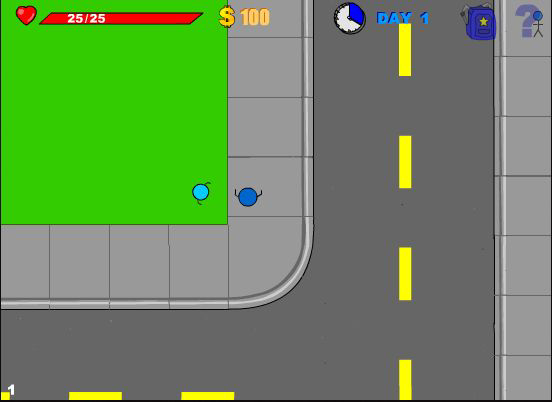
Animation asked viewers to watch stick figures perform. Games allowed players to inhabit them. The same visual clarity that helped fight scenes also made controls readable. A thin character stood out against platforms, obstacles, and interface elements without occupying much screen space.
Because appearance carried little predetermined identity, action defined the avatar. A cautious player made the figure seem cautious. A reckless sequence of jumps gave it bravado. Failure could become comedy when the uncomplicated body folded into an absurd pose, then returned moments later for another attempt.
Game designers could also customize through tiny differences. A hat, colored head, weapon, or altered stance became enough to distinguish rivals. Against the shared visual grammar of lines and circles, one accessory gained the force of a costume. Economy sharpened identity rather than erasing it.
Names arrived after movement
Many famous characters are recognized first by faces. Stick figures often became recognizable through behavior. One moved with impossible confidence; another survived elaborate accidents; another answered every choice with escalating disaster. Personality accumulated across gestures and consequences.
This reversed the normal order of character design. Instead of a detailed appearance suggesting a backstory, repeated motion created an identity that viewers later attached to a simple silhouette. The figure became specific because audiences remembered what had happened to it.
Anyone could draw the hero
Stick figures crossed easily from screen to notebook. A fan did not need professional skill to recreate a favorite character during class, map out a fight, or invent an alternate scene. The icon belonged to a visual language nearly everyone had used since childhood.
That reproducibility strengthened community. Players made animations, comics, profile images, and forum signatures without struggling to match a complicated model sheet. Variations remained readable because the essential form survived personal handwriting. Fandom could participate in the design instead of only copying it.
The same openness fueled playful competition. Animators compared combat sequences, movement techniques, and increasingly elaborate effects while keeping the central bodies simple. Skill appeared in execution rather than ownership of expensive tools. A familiar stick figure became common ground on which individual style could be demonstrated.
Blankness resisted aging
The surrounding interface may date, and the audio compression may reveal its era, but the central body remains legible. Modern viewers understand the same poses immediately. Minimalism gives preservation a head start: there are fewer textures to break, fewer details to blur, and fewer conventions that require explanation.
This does not mean every stick animation is timeless. Humor, pacing, and references still belong to their context. Yet the figure itself travels lightly. It can enter new resolutions and platforms without needing redesign, carrying an old performance into a new window almost unchanged.
A shared alphabet of motion
The internet did not invent stick figures, but it discovered how perfectly they fit participatory digital culture. They were cheap to transmit, approachable to create, clear in motion, and flexible enough to receive countless identities. Technical limitation and expressive possibility pointed in the same direction.
Their importance lies less in a single mascot than in the network of creators and audiences built around them. One animator’s experiment taught another person what could be attempted. One game turned a generic body into a remembered protagonist. One fan’s drawing returned the character to circulation.
The stick figure became an icon by refusing the usual requirements of an icon. It had no fixed face, expensive rendering, or protected visual complexity. Recognition emerged from repetition and performance. The fewer marks it claimed, the more people could carry it.
Look at one standing motionless and almost nothing is there. Let it lean, run, stumble, or raise a hand, and intention appears immediately. That transformation explains the form’s digital life. The internet needed characters that could move quickly between files, creators, games, and imaginations. A handful of lines was enough to make the journey.
Blank faces left room for ours.