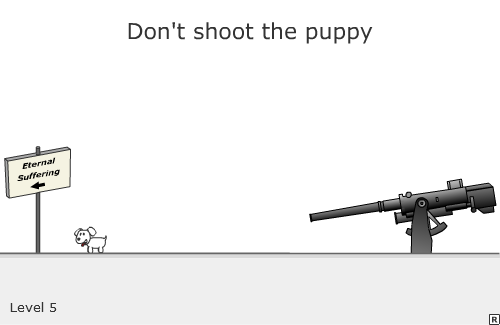
History has an odd-shaped edge
When people imagine digital preservation, they often picture important documents, celebrated artworks, and famous games. Those deserve care. Yet the character of the early web also lived in stranger material: unfinished experiments, personal homepages, inexplicable animations, broken quizzes, tiny fan games, and jokes understood by twelve forum members.
These artifacts rarely look significant in isolation. Their value appears collectively. They reveal what ordinary people made when publishing required enthusiasm but little permission. The web was not only a delivery system for polished culture; it was a workshop with the doors left open.
If preservation selects only obvious masterpieces, the past becomes tidier than it was. We retain the monuments and lose the alleys, handmade signs, and rooms where no one followed a style guide. History needs its odd-shaped edge because that is where participation becomes visible.
Broken things still contain evidence
An old game may open with missing music, a dead score service, or a button that once contacted a vanished website. It is tempting to classify the result as worthless. Yet the break reveals dependencies that a perfect screenshot cannot show.
A high-score panel proves that players once compared performances across machines. A disabled login hints at communities surrounding the game. A link to an unavailable sequel records an ambition, even when the destination is gone. Failure maps the network that once supported the file.
Preservation should not celebrate malfunction for its own sake. Whenever possible, an artifact should work. But restoration must also document what has been replaced, simulated, or lost. The cracks are historical information. Repairing them invisibly can create a smoother experience while erasing the shape of the original environment.
Weirdness resists tidy categories
Portals organized games into action, puzzle, sports, strategy, and adventure. Many creations refused to fit. An interactive cartoon might contain one puzzle. A virtual pet might behave like a toy, story, and desktop ornament. A parody could be almost unplayable yet culturally precise.
These hybrids matter because categories influence what archives notice. If a collector searches only for conventional games, works that blur animation and interaction may disappear. The very quality that made them inventive makes them difficult to catalog.
Amateur marks identify the maker
Rough drawing, uneven audio, spelling mistakes, and improvised interfaces are often treated as defects to be cleaned. In personal web culture, they can be signatures. They show how a creator thought with the tools available, what they prioritized, and where skill was still developing.
Removing those marks risks replacing a person with an abstract product. A strange menu may reveal humor. An overlong introduction may show excitement that resisted editing. A borrowed texture beside an original drawing can expose the process of learning by assembly.
Context lived around the rectangle
A game file was only part of a browser game’s identity. The surrounding page carried ratings, comments, instructions, advertisements, badges, and recommendations. The portal’s colors and layout shaped expectations before the preloader appeared.
Players also arrived through specific paths. A friend sent a link, a search result surfaced a mirror, or a homepage featured the game beside unrelated titles. Those routes affected who played and how the work spread. Saving the central file without its context preserves the stage while discarding the theater.
Capturing everything is rarely possible, but archives can record page images, descriptions, dates, creators, versions, and known hosts. Even partial context prevents an artifact from floating as an anonymous object. Metadata becomes a set of threads leading back toward its social life.
Copies complicate authenticity
Flash games traveled freely and chaotically. The same title might appear on hundreds of portals with different preloaders, advertisements, language edits, or technical changes. One copy could include a feature missing from another. Which version is the real one?
The question may have no single answer. The developer’s release carries authority, while a widely distributed portal version may reflect what most players remember. A later update can be more complete, yet an earlier build may preserve mechanics that disappeared.
Legal and ethical shadows remain
Preserving fan culture can involve copyrighted characters, unlicensed music, abandoned accounts, and creators who are difficult to locate. Technical ability to save a file does not settle every question about displaying or distributing it.
Archives must balance access, historical value, creator wishes, and rights. That work is slower than copying folders. It may require attribution, limited availability, takedown processes, or honest uncertainty when ownership cannot be established.
Ethical care also applies to personal material. A teenage creator may not have imagined that a joke or diary-like project would remain public decades later. Preservation should remember that artifacts were made by people, not simply generated by an era for future study.
Future curiosity cannot be predicted
Today’s disposable oddity may answer tomorrow’s important question. Researchers might study interface conventions, informal language, accessibility, music compression, fan communities, or representations that contemporary players barely noticed. The use cannot be known at the moment of selection.
That uncertainty argues for breadth. Famous works already attract copies, discussion, and institutional attention. Obscure artifacts are more vulnerable precisely because no current audience can defend them. By the time their relevance becomes clear, the original host and creator may be unreachable.
Keeping weird material preserves surprise. An archive should not only confirm what historians already believe; it should contain objects capable of changing the story. A baffling file with three plays may complicate a neat theory more productively than another copy of a celebrated hit.
Save the neighborhood, not only landmarks
The old web felt alive because polished and awkward work stood near each other. A portal could lead from a professional sponsorship game to a student animation, then to an experimental puzzle with no instructions. Browsing created encounters that no recommendation system would confidently arrange.
Preserving that texture requires resisting the urge to make history uniformly excellent. The abandoned series, broken link, excessive introduction, and inexplicable crossover belong beside the classics. Together they show a culture testing what a browser could contain.
The weird web does not ask to be admired without judgment. It asks not to be forgotten before judgment is possible. Save the famous game, certainly, but save the neighbor that explains what fame emerged from. A true archive should leave enough mess for history to breathe.