The controller was common ground
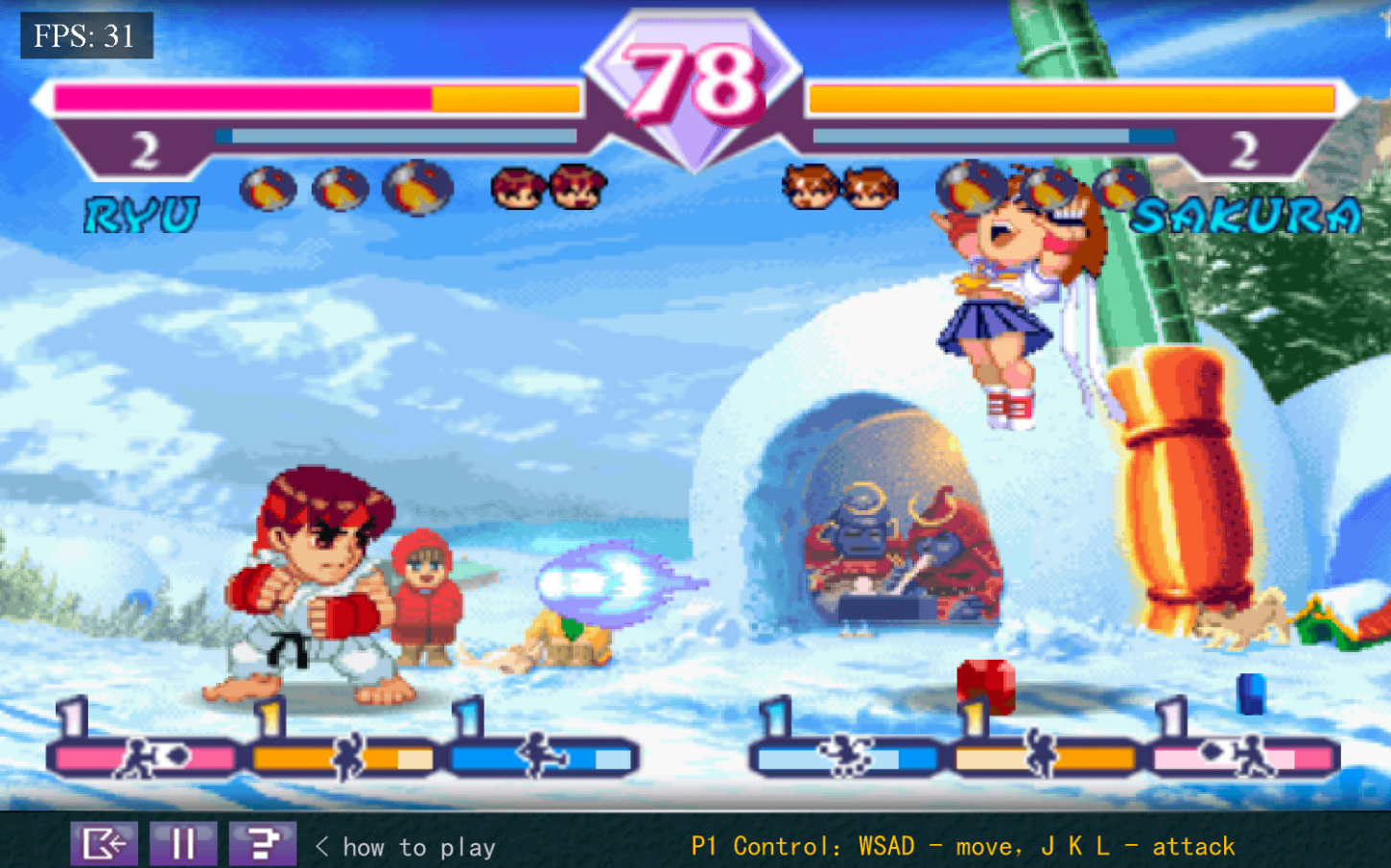
Two-player browser games often began with an awkward instruction screen. One person received WASD, the other received arrow keys, and both leaned toward the same keyboard. There were no wireless controllers, separate screens, or carefully measured seats. The hardware was designed for typing alone, yet it became a miniature arcade cabinet through cooperation and compromise.
The arrangement made competition physical before the match started. Elbows needed territory. Wrists crossed near shared keys. A laptop could tilt under enthusiastic pressure. Players negotiated who sat on which side and whether reaching across the center counted as interference.
Four keys became a complete language
Shared-keyboard games had to work with limited controls. Each player might receive movement and one action, sometimes less. The restriction encouraged games built around positioning, timing, and direct response rather than complicated command lists.
Within minutes, those few keys developed nuance. A quick tap meant caution; a held direction meant commitment. One action button could jump, attack, throw, or confirm depending on context. Players learned the grammar together because every input produced an immediate, public consequence.
Simple controls also shortened the distance between invitation and rivalry. A friend did not need an account, tutorial, or personal device. They only needed half a keyboard. “Use these keys” was enough to begin, and the first round could teach everything the instruction screen had missed.
The keyboard revealed intention
On separate controllers, an opponent’s hands are easy to ignore. On one keyboard, movements become tells. Fingers hover over likely directions. A thumb shifts toward the action key. A player may press harder when nervous even though force changes nothing in the game.
These signals add a playful layer of imperfect information. Looking at the other person’s hand risks neglecting the screen, but ignoring it means missing clues. Feints can occur outside the software: a finger twitches toward one key before another is pressed.
Sound contributes too. Mechanical clicks announce frantic movement, hesitation creates silence, and a single decisive press can be heard before its effect is understood. The keyboard becomes both controller and percussion instrument, broadcasting the match’s emotional tempo to everyone nearby.
Collisions continued beyond the screen
The best local matches created laughter because virtual and physical conflicts overlapped. Two characters collided, and two hands did the same. Someone reached too far, blocked a key, or accused an elbow of causing defeat. The furniture became part of the arena.
House rules emerged quickly. No covering the other player’s keys. No holding the laptop screen. No restarting before everyone agreed. Some groups allowed gentle disruption; others treated any contact as cheating. The game supplied coded rules, while the room supplied a second rulebook through argument.
Spectators stood close enough to join
A shared-keyboard game naturally attracted an audience. The players occupied one screen and one chair-width of space, leaving friends to gather behind them. Spectators could see both strategies and both reactions at once.
Commentary developed without invitation. Someone predicted a mistake, celebrated a reversal, or advised one player loudly enough for the other to hear. Because rounds were short, watching carried the promise of an imminent turn. The audience was a queue as much as a crowd.
Rotation created informal tournaments. Winner stays, loser moves, best of three, or next person takes the arrow keys: every group invented a format suited to its size and patience. A tiny browser game became infrastructure for an afternoon because participation could expand beyond the two names on the screen.
Imbalance became personal mythology
Keyboard layouts were not always fair. One control scheme might have better spacing, or certain key combinations might fail when pressed simultaneously because the hardware could not register them. The game’s symmetrical design met an asymmetrical machine.
Players noticed and built stories around these flaws. The arrow keys were lucky. The left side stuck. A particular laptop refused the winning combination. Switching positions became a test of whether skill or hardware deserved credit.
These imperfections created local knowledge. Regular players knew which keyboard tolerated aggressive input and which required restraint. Mastery included understanding the device’s personality. The same game could feel different on another computer because its arena extended into plastic, circuitry, and wear.
Rivalry carried friendship inside it
Local competition could be fierce because it remained contained by presence. Taunts landed immediately, but so did laughter. A player could see whether frustration was real and soften the joke. Victory had a witness who understood exactly how it happened.
Cooperative games made the connection even clearer. Two people needed to coordinate movement while sharing little physical space. Calling directions, counting down jumps, and recovering from mistakes required communication that online matchmaking often replaces with icons or silence.
Whether competing or cooperating, players built a joint memory. The remembered event was not only the game’s outcome. It included who sat where, who kept hitting the wrong key, and which argument became a running joke. The software organized a social scene larger than its rules.
One screen meant one moment
Online multiplayer offers distance, scale, and opponents at any hour. Shared-keyboard play offered something narrower: complete simultaneity. Both players saw the same frame, heard the same sound, and occupied the same pause after a surprising result.
There was no separate feed to reconcile and no voice channel translating distant reactions. A gasp reached the room at the instant the event occurred. Looking away from the screen revealed the person whose decision had just changed it.
That unity made even crude games feel vivid. Graphics could be simple and arenas small because the emotional resolution came from the people beside the machine. The browser handled movement and scoring; the room supplied stakes, comedy, and ceremony.
The shared keyboard was never an ideal controller. It was cramped, noisy, and vulnerable to disputed elbows. Yet those defects made participation tangible. Each player received only half the keys and, in exchange, the whole reaction of another person.
When the round ended, hands lifted from the same surface. Someone demanded another match, someone defended a terrible decision, and someone behind the chair asked for a turn. The game could reset instantly, but the room carried every previous round forward. One keyboard had become enough equipment for a community measured in shared, crowded inches.