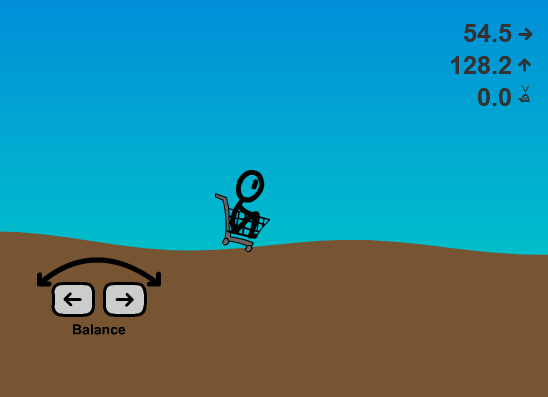
A complete world before the bell
Some browser games needed less time than making tea. They opened, explained themselves, surprised the player, and finished within five minutes. Their brevity was not evidence of an unfinished idea. At their best, these games delivered a complete dramatic curve in the space other games used for a tutorial.
That scale suited the places where browser play happened. A school break, a slow moment at work, or a borrowed family computer offered uncertain windows of freedom. The player might need to stop without warning. A short game respected that reality while still promising something shaped, not merely something endless.
No room for ceremonial walking
Long games can spend time establishing geography, teaching inventories, and introducing supporting systems. A miniature browser game cannot afford that ceremony. The first interaction must be meaningful, and each subsequent moment must alter the player’s understanding.
This pressure encourages elegant openings. A cursor changes near an object. A character responds strangely to the first key press. A rule appears through immediate consequence rather than a paragraph of explanation. The player learns while the experience is already moving.
One idea can carry everything
The five-minute masterpiece often begins with a single question. What if the controls changed every few seconds? What if a platform game remembered previous failures? What if clicking one innocent object rearranged the entire screen? The game exists to explore that question until it reaches a satisfying conclusion.
It does not need a skill tree or a dozen environments because variety comes from reinterpretation. The same action acquires new meaning as context changes. A mechanic introduced as a joke may become a puzzle, then a threat, then the final answer. Concentration gives the idea room to reveal its hidden sides.
Surprise benefits from compression
A twist is strongest when the player remembers every assumption it overturns. In a short game, the opening remains fresh when the reversal arrives. The player can feel the whole structure pivot at once.
Browser creators used that advantage playfully. A harmless interface could reveal itself as the level. Instructions could become unreliable. Victory might expose a second objective that reframed the preceding minutes. Because the game had asked for little time, it could take unusual risks without exhausting goodwill.
Small games invited strange authors
The short format lowered the distance between having an idea and releasing it. A solo creator or tiny team could build a focused experiment without supplying the enormous volume expected from a commercial production. Personal humor, rough drawings, and peculiar obsessions could reach players directly.
That accessibility widened the emotional range of browser games. Alongside action and puzzles appeared interactive poems, political jokes, autobiographical fragments, optical toys, and stories that lasted one conversation. Not every experiment succeeded, but the ecosystem had space for attempts that would have struggled to justify a larger format.
Replay became a second reading
A short ending rarely meant the experience was exhausted. Players restarted to test another choice, notice an early clue, improve a score, or show the game to someone beside them. Repetition revealed structure that surprise had initially concealed.
The second playthrough often felt like rereading a compact story. Knowing the destination changed the meaning of the opening. A throwaway detail became preparation; an awkward pause became deliberate timing. The player could admire construction because the full shape was now visible.
Length made sharing easy as well. Instead of describing a favorite moment, a player could hand over the mouse and wait. Five minutes later, both people possessed the same reference. The game became a conversational object, small enough to pass intact from one person to another.
Endings gained unusual weight
When a game lasts only minutes, its ending occupies a significant part of the memory. There may be no long middle to blur the relationship between premise and conclusion. The final image answers the opening almost directly.
Some short games used that closeness for comedy, landing on a punchline that transformed every previous action into setup. Others produced melancholy by revealing the cost of a simple routine. A sudden cut to silence could be more affecting than an elaborate cinematic because the player had personally completed every step leading there.
Duration is part of the meaning
Brevity is sometimes discussed as though it were merely convenient. Yet duration changes what an artwork can say. A tiny game can depict one realization without pretending to represent an entire life. It can preserve a mood before it requires escalation. It can leave an idea singular rather than turning it into content.
This restraint demands confidence. The creator must recognize when the promise has been fulfilled and resist adding weaker repetitions to make the project appear larger. Ending early risks being called slight, but continuing can dilute the precise experience that made the game worth creating.
Players contribute a different kind of attention in return. Knowing the game is short encourages them to follow its rhythm without planning around fatigue. The experience can be held as one unit, closer to a song, comic strip, or short film than to an ongoing service.
A small door still opens fully
The browser arcade taught a generation that importance does not correlate with hours played. A game could arrive between obligations, occupy a handful of minutes, and leave behind an image that lasted for years. Its modest scale made the encounter feel accidental and personal, like finding a handwritten story tucked inside a library book.
Five-minute games did not compete with sprawling adventures by imitating them. They offered a different promise: complete attention briefly rewarded. Their finest examples used every click, sound, and pause to move toward an ending that arrived exactly when the idea became whole.
That craft deserves the word masterpiece. Mastery is not measured by acreage. It appears in proportion, timing, and the absence of anything unnecessary. A tiny browser window can contain a world if the creator knows where its borders belong and why they matter.
The next tab may take only seconds to open. Inside it, a rule can reverse, a joke can bloom, or a final image can change the meaning of the first. Then the screen returns the player to the ordinary day, carrying proof that five minutes was not a limitation. It was the form.